Tax Season Survival Guide for Solo Operators
Stay calm, organised, and audit-ready with these year-round habits.
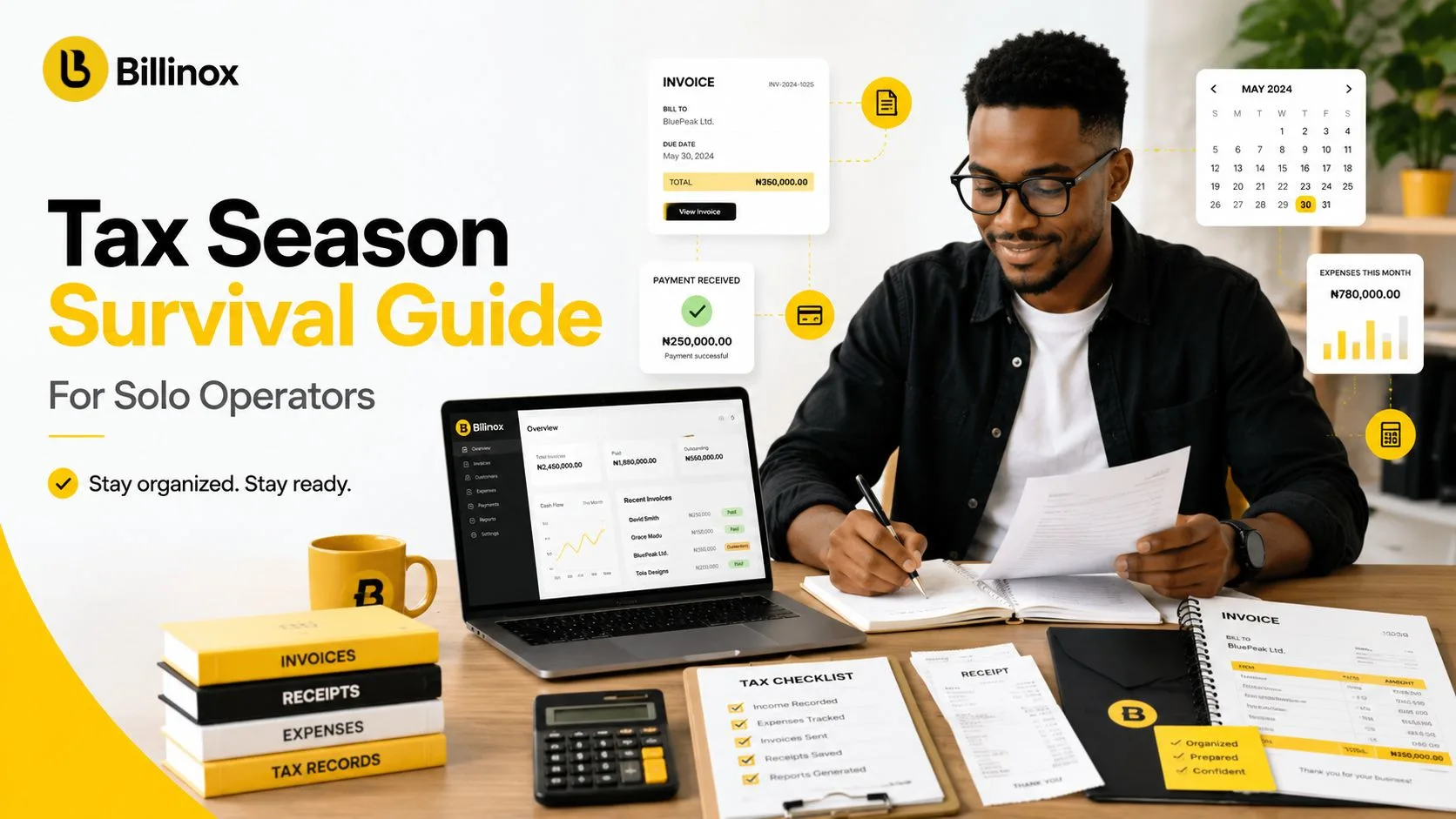
Tax season can feel overwhelming when you run a business on your own. Between finding receipts, reviewing invoices, tracking payments, calculating expenses, and preparing financial records, it is easy for important details to get lost.
The good news? Tax preparation does not have to become a yearly scramble.
For solo operators, freelancers, consultants, contractors, and small business owners, good financial organization throughout the year can make tax season significantly easier. Here is a practical tax season survival guide to help you get your business records in order and avoid unnecessary stress.
1. Keep Your Business Records Organized
The foundation of easier tax preparation is accurate record keeping.
Your business records should clearly show:
- Sales and income
- Invoices issued
- Payments received
- Business expenses
- Outstanding customer balances
- Taxes collected or paid
- Relevant receipts and supporting documents
Avoid keeping everything in scattered notebooks, chat messages, email threads, and spreadsheets. A simple invoicing and bookkeeping workflow can help you keep important financial information together.
With Billinox, solo operators can create invoices and quotations, track payments, manage customers, and monitor business transactions from their mobile device.
2. Review Every Invoice You Issued
Before tax filing, review your invoices for the relevant tax period.
Check that each invoice contains accurate information such as:
- Invoice date
- Customer details
- Products or services provided
- Quantity and pricing
- Discounts
- Taxes
- Total amount
- Payment status
This review can help you identify missing invoices, duplicate records, incorrect totals, or payments that were never properly recorded.
It is also useful to compare your invoice records against your bank statements or payment accounts so your reported income matches the money your business actually received.
3. Separate Income From Outstanding Payments
One common mistake among solo business owners is treating every invoice as money already received.
An invoice can be paid, partially paid, or unpaid.
Before tax season, create a clear picture of:
- Total invoiced income
- Total payments received
- Partially paid invoices
- Outstanding customer balances
- Overdue invoices
This distinction gives you a much better understanding of your business cash flow and helps you prepare accurate financial records.
4. Gather Your Business Expenses
Income is only one side of your business finances. You also need to keep track of legitimate business expenses and retain appropriate supporting documentation.
Depending on your business and local tax rules, expenses may include things such as:
- Software subscriptions
- Internet and phone costs
- Business equipment
- Office supplies
- Transportation
- Professional services
- Advertising and marketing
- Business-related fees
Do not assume that an expense is automatically tax-deductible. Tax deductions and allowable expenses vary by country, business structure, and tax regulations, so consult a qualified tax professional when you are unsure.
5. Reconcile Your Records
A quick reconciliation can reveal problems before they become bigger issues.
Compare your:
Invoices → Payments → Bank records → Expense records
Look for differences such as payments that were received but not marked as paid, invoices with incorrect balances, duplicate transactions, or expenses without supporting documentation.
Regular reconciliation also makes it easier to understand how much money is actually coming into and leaving your business.
6. Check Your Tax Information
Tax rules can change, and your obligations depend on where your business operates and how it is structured.
Before submitting a tax return, verify:
- Applicable tax rates
- Filing deadlines
- Registration requirements
- Deductible expenses
- Record-retention requirements
- VAT or sales tax obligations, where applicable
If you operate in Nigeria, for example, make sure you check the latest requirements from the relevant Nigerian tax authorities rather than relying on outdated advice or information from previous tax years.
When the rules are complicated, professional tax advice can save you from expensive mistakes.
7. Create a Tax-Ready Financial Workflow
The best way to survive tax season is not to prepare everything at the last minute.
Instead, build a simple monthly routine:
- Record every sale.
- Issue invoices promptly.
- Record payments when they arrive.
- Track business expenses.
- Reconcile your records.
- Review unpaid invoices.
- Keep supporting documents organized.
- Set aside money for expected tax obligations.
Spending a small amount of time each month maintaining your records can prevent hours of stressful cleanup later.
8. Use Invoicing Software to Reduce Manual Work
Solo operators already have enough responsibilities. Manually calculating invoices, tracking customer balances, and searching through old records can consume valuable time.
An invoicing app can help automate repetitive administrative tasks while giving you a clearer view of your business finances.
Billinox is designed for small businesses and solo operators who need a simple way to create professional invoices and quotations, track payments, manage customers, and stay organized—even when working offline.
Final Thoughts
Tax season does not need to be a yearly financial emergency.
The key is consistent record keeping. When your invoices, payments, expenses, and customer balances are organized throughout the year, preparing your tax records becomes much easier.
Start with the basics: keep accurate invoices, track every payment, organize your expenses, reconcile your records, and stay informed about your local tax requirements.
Your future self will thank you when tax season arrives.
Run your business. Keep your finances organized. Let Billinox handle the invoicing.