5 Ways to Create Better Invoices That Get Paid Faster
Small wording and layout changes can shave days off your average payment time. Here's what actually moves the needle.
5 Ways to Create Better Invoices That Get Paid Faster
Getting paid on time starts with creating a clear, professional, and easy-to-understand invoice. A well-designed invoice doesn't just tell your customer how much they owe—it removes confusion, builds trust, and makes it easier for them to complete the payment.
Whether you're a freelancer, consultant, contractor, retailer, or small business owner, improving your invoicing process can help reduce payment delays and improve your cash flow.
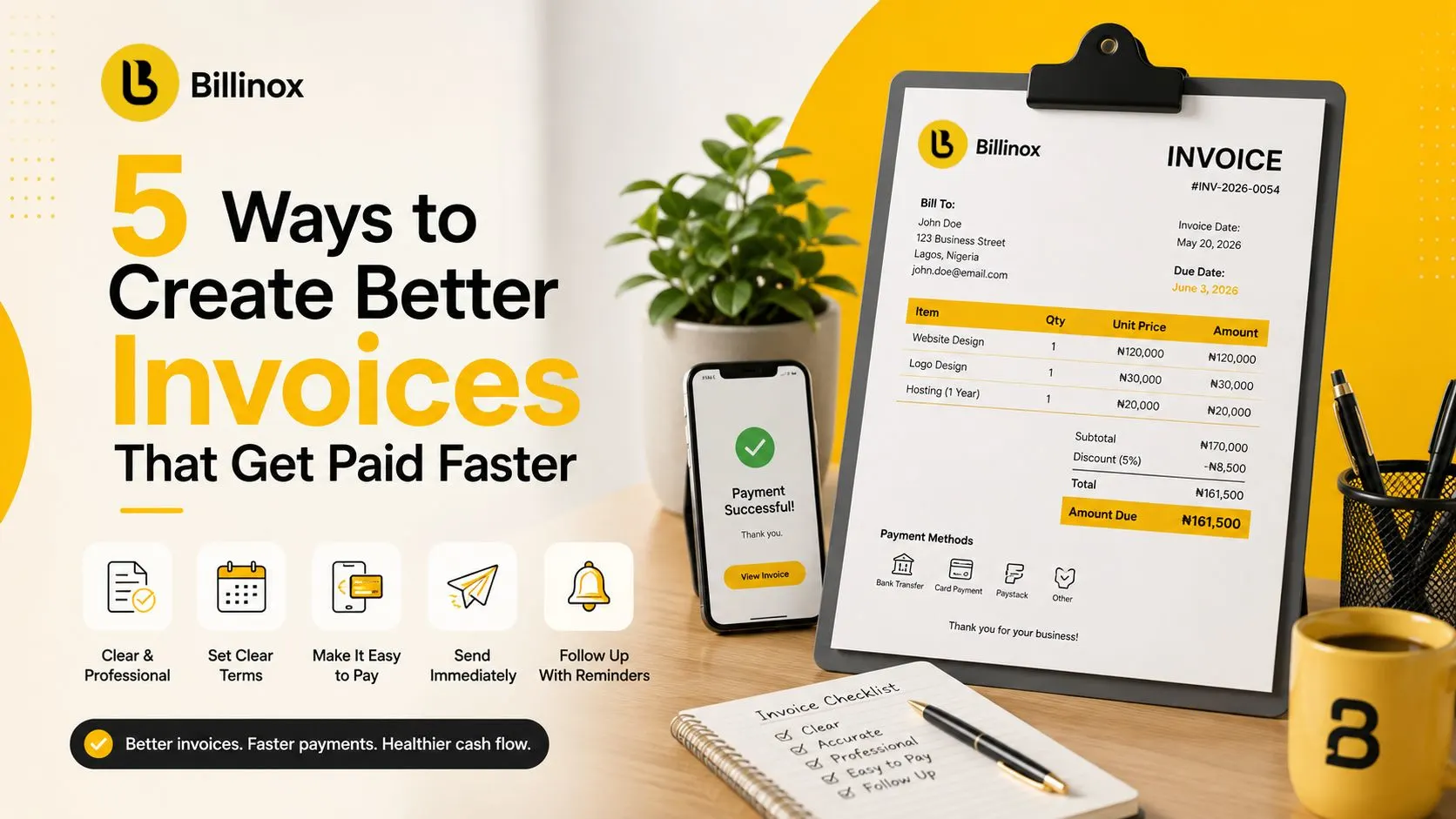
Here are 5 practical ways to create better invoices that get paid faster.
1. Make Your Invoice Clear and Professional
Your invoice should make the important information immediately obvious.
A customer should be able to answer these questions within seconds:
- Who sent the invoice?
- What am I being charged for?
- How much do I owe?
- When is payment due?
- How can I pay?
Include essential invoice information such as:
- Business name and contact information
- Customer name and contact information
- Unique invoice number
- Invoice date
- Payment due date
- Product or service descriptions
- Quantity and unit price
- Discounts and taxes
- Total amount due
- Payment instructions
Avoid unnecessary information that makes your invoice difficult to scan.
Why it matters
A professional invoice reduces questions and misunderstandings. When customers can quickly understand what they're paying for, there are fewer reasons for them to delay payment.
Tip: Use a clean invoice template with clear sections, readable typography, and a prominent total amount.
2. Set Clear Payment Terms and Due Dates
One of the easiest ways to encourage faster payments is to clearly communicate when payment is expected.
Instead of simply writing:
Payment due soon.
Use a specific payment term such as:
- Due on receipt
- Net 7
- Net 15
- Net 30
Always include an actual due date on the invoice.
For example:
Payment Due: September 15, 2026
This removes ambiguity and gives your customer a specific deadline.
Make payment expectations clear
If you charge late fees, deposits, or require partial payments, communicate those terms before or when the invoice is issued.
Clear payment terms help both you and your customer understand the agreement.
3. Make It Easy for Customers to Pay
Even if your invoice is perfect, customers may delay payment if the payment process is complicated.
Offer convenient payment methods that your customers already use.
Depending on your business and location, you may support:
- Bank transfer
- Debit or credit card
- Mobile payments
- Payment links
- Digital wallets
- Other supported online payment methods
For digital invoices, make the payment instructions highly visible.
For example:
Amount Due: ₦150,000
Pay Online →
The fewer steps required to complete payment, the better.
Reduce payment friction
Think of your invoice as part of the payment experience—not just a document.
A customer shouldn't have to search through emails or messages to find your bank details or figure out where to send payment.
4. Send Invoices Immediately
Timing matters.
The longer you wait to send an invoice, the longer you may have to wait to get paid.
For completed projects or delivered products, make invoicing part of your normal workflow.
A simple process can be:
Product/Service Delivered
↓
Invoice Created
↓
Invoice Sent
↓
Payment Received
↓
Payment Recorded
For recurring customers, consider creating a consistent invoicing schedule.
Why faster invoicing improves cash flow
If you complete work on Monday but don't send the invoice until Friday, you've already added several unnecessary days to your payment cycle.
Invoice promptly → Start the payment clock sooner.
5. Follow Up With Payment Reminders
Sometimes customers don't pay because they forgot—not because they don't want to pay.
A friendly payment reminder can make a significant difference.
Consider sending reminders:
- Before the due date
- On the due date
- Shortly after the due date
- When an invoice becomes overdue
Keep reminders professional and concise.
Example payment reminder
Subject: Payment Reminder — Invoice #INV-1024
Hi John,
Just a quick reminder that invoice #INV-1024 for ₦150,000 is due on September 15.
You can complete the payment using the payment details included in the invoice.
Thank you!
Automated payment reminders can make this process even easier by reducing the need to manually track every outstanding invoice.
Bonus: Track Your Invoices and Payments
Creating better invoices is only part of an effective invoicing process.
You should also know:
- Which invoices are unpaid
- Which invoices are overdue
- How much customers owe you
- Which payments have been received
- Your total outstanding balance
- Your payment completion rate
This gives you a better view of your business cash flow and helps you follow up with customers at the right time.
Create Better Invoices With Billinox
Managing invoices shouldn't require complicated accounting software.
Billinox is a simple invoicing and quotation app designed to help small businesses create professional invoices, manage customers, track payments, and stay organized.
With Billinox, you can create invoices and quotations from your mobile device, manage your customer records, track payments, and keep your invoicing workflow organized—even when you're offline.
Better invoices. Better payment tracking. Better cash flow.
Start improving your invoicing workflow with Billinox.
Frequently Asked Questions
What makes a good invoice?
A good invoice is clear, accurate, professional, and easy to pay. It should include your business information, customer details, invoice number, itemized products or services, total amount, payment terms, and due date.
How can I get customers to pay invoices faster?
Make invoices easy to understand, provide convenient payment options, set clear due dates, send invoices promptly, and use friendly payment reminders.
Should invoices include a due date?
Yes. A specific due date makes your payment expectations clear and helps customers know exactly when payment is required.
How often should I send payment reminders?
A practical approach is to send a reminder before the due date, another on the due date, and follow up after the invoice becomes overdue if payment has not been received.
What should an invoice include?
A professional invoice should generally include the seller and customer details, invoice number, invoice date, due date, itemized products or services, quantities, prices, taxes or discounts where applicable, total amount due, and payment instructions.
Final Thoughts
Getting paid faster isn't only about chasing customers for payment. It's about building an invoicing process that makes payment clear, convenient, and timely.
Start with these five improvements:
- Create clear and professional invoices
- Set specific payment terms and due dates
- Make payment easy
- Send invoices promptly
- Use timely payment reminders
A better invoicing process can mean fewer payment delays, better cash flow, and less time spent following up on outstanding invoices.