Quotations vs Invoices: When to Use Each
A quick guide to using estimates, quotes, and invoices the right way in your sales workflow.
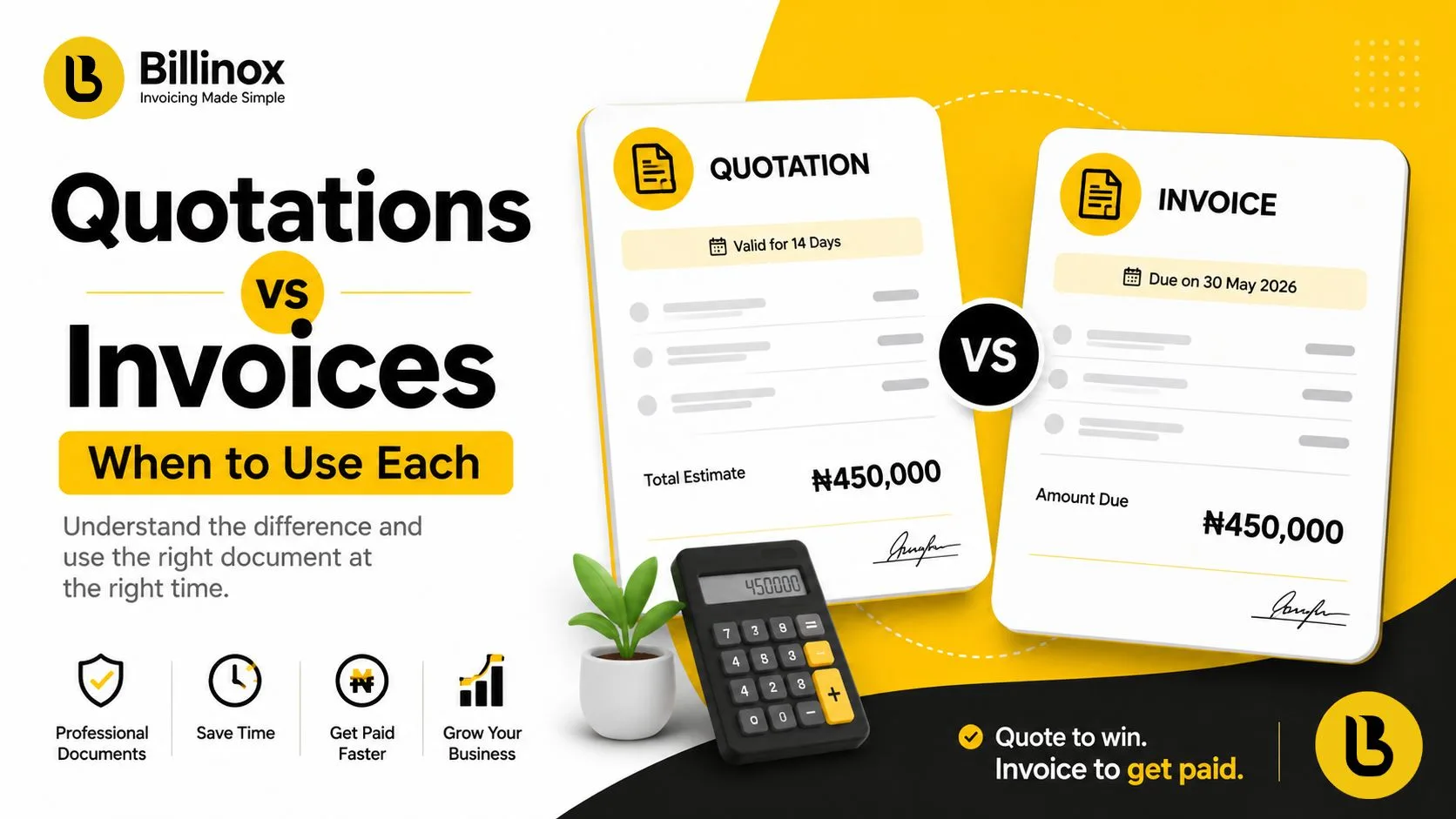
If you run a small business, freelancer business, or service-based company, understanding the difference between a quotation and an invoice is essential. Both documents help you communicate prices and manage payments, but they serve very different purposes.
A simple rule to remember is:
A quotation tells a customer what something will cost. An invoice tells them what they owe.
Using the right document at the right stage of a sale can make your business look more professional, reduce payment confusion, and help you get paid faster.
What Is a Quotation?
A quotation is a document that shows a potential customer how much you expect to charge for a product or service.
It is usually created before the customer agrees to buy.
For example, if a client asks you to design a website, you might create a quotation that includes:
- Website design: $500
- Development: $1,000
- Domain setup: $50
- Total: $1,550
- Estimated delivery: 30 days
- Quotation validity: 14 days
The customer can review the quotation and decide whether to proceed.
A quotation is therefore primarily a sales and pricing document.
When Should You Use a Quotation?
Use a quotation when:
- A customer asks for pricing
- The final cost is not yet agreed
- You provide custom services
- A project requires multiple deliverables
- You want to give customers different pricing options
- You need customer approval before starting work
For businesses that regularly provide customized services, creating professional quotations can make the sales process much easier.
What Is an Invoice?
An invoice is a payment request sent to a customer after a purchase, service agreement, or other billable transaction.
Unlike a quotation, an invoice represents an amount that the customer is expected to pay.
An invoice typically includes:
- Invoice number
- Business name and contact information
- Customer information
- Products or services provided
- Quantity and prices
- Discounts and taxes
- Total amount
- Payment terms
- Due date
- Payment instructions
For example, after a customer approves your $1,550 website quotation and you complete the agreed work, you can issue an invoice for the amount due.
An invoice is therefore primarily a billing and payment document.
Quotation vs Invoice: The Key Difference
The biggest difference is when the document is used.
| Quotation | Invoice |
|---|---|
| Sent before a sale is confirmed | Sent when payment is due |
| Shows estimated or agreed pricing | Requests payment |
| Helps customers make a buying decision | Helps businesses collect payment |
| Usually requires customer approval | Usually follows a completed or billable transaction |
| Not normally a payment request | Is a payment request |
Think of the customer journey like this:
Customer asks for price → Quotation → Customer approves → Product/service delivered → Invoice → Payment
This workflow makes it easier to understand why both documents are important.
Can a Quotation Become an Invoice?
Yes. In many businesses, an approved quotation becomes the basis for an invoice.
For example, a graphic designer might send a quotation for a branding project worth $800. Once the customer accepts the quotation, the designer can use the agreed items and prices to create an invoice.
This saves time and reduces errors because the business does not need to manually enter the same information again.
However, a quotation and invoice should still remain separate documents because they have different purposes and statuses.
What Happens If the Customer Rejects a Quotation?
Nothing needs to be invoiced.
A quotation is not normally a request for payment. It gives the customer an opportunity to review your proposed pricing and decide whether to proceed.
The customer might:
- Accept the quotation
- Reject the quotation
- Request changes
- Ask for a lower price
- Request additional services
If the customer accepts, you can move forward with the sale or project and eventually issue an invoice.
What About Deposits and Partial Payments?
This is where invoices become particularly useful.
Suppose a contractor quotes $5,000 for a project and requires a 50% deposit before starting.
The quotation can state the project price and payment terms. After the customer accepts, the contractor can issue an invoice for the $2,500 deposit.
Additional invoices can then be issued as project milestones are completed.
This approach provides a clear record of what was agreed, what has been billed, and what remains unpaid.
Why Professional Quotations Matter
A good quotation does more than display a price.
It sets expectations.
A detailed quotation can clearly communicate:
- What is included
- What is excluded
- Project scope
- Pricing
- Delivery timelines
- Payment terms
- Quotation validity
- Additional charges
This can reduce misunderstandings and help customers feel more confident about doing business with you.
Why Professional Invoices Matter
Professional invoices make it easier for customers to understand exactly what they need to pay.
A clear invoice should make the following obvious:
What did I buy?
How much does it cost?
When do I need to pay?
How can I pay?
The easier you make these questions to answer, the smoother your payment process can become.
Quotation or Invoice: Which Should You Create First?
In most customer transactions, the quotation comes first.
If a customer asks, "How much will this cost?", create a quotation.
If the customer has agreed to the price and you need to request payment, create an invoice.
A Simple Example
Imagine you run a furniture business.
A customer wants a custom dining table.
You provide a quotation for ₦450,000, including materials, labor, delivery, and installation.
The customer approves the quotation.
You build and deliver the table.
You then issue an invoice for the agreed amount, or for the applicable deposit, milestone, or remaining balance.
The quotation helped win and define the sale.
The invoice helped collect the money.
Manage Quotations and Invoices More Easily with Billinox
Managing business documents manually can become frustrating as your customer list grows.
Billinox helps small businesses create professional quotations and invoices, manage customers and items, track payments, and keep important business records organized.
Instead of creating documents from scratch every time, you can manage your invoicing workflow from your mobile device.
Whether you're sending a quotation to a potential customer or following up on an unpaid invoice, having the right tools can make everyday business administration much simpler.
Final Thoughts
Quotations and invoices are both essential business documents, but they solve different problems.
Use a quotation when you need to present pricing and get customer approval.
Use an invoice when you need to formally request payment.
Understanding when to use each document helps you create a more professional sales process, communicate clearly with customers, and keep better financial records.
In short: quote before the sale, invoice when payment is due.
And when your business starts handling more customers, quotations, invoices, and payments, using dedicated invoicing software can help you stay organized without adding unnecessary administrative work.